An appraisal percentage represents the rate of increase in your salary compared to your previous compensation. It’s the percentage by which your current salary exceeds your old salary, typically given during annual performance reviews or promotional cycles.
Understanding how to calculate your appraisal percentage is crucial for several reasons. It helps you evaluate whether your salary increase meets industry standards, negotiate better compensation packages, and track your career growth over time. Whether you’re expecting a raise or planning your financial future, knowing your exact salary increment percentage empowers you to make informed career decisions.
Calculating your appraisal percentage manually is straightforward once you understand the basic formula. Here’s a step-by-step guide to help you determine your salary hike percentage.
The fundamental appraisal calculation formula is:
Appraisal Percentage = ((New Salary – Old Salary) / Old Salary) × 100
Follow these simple steps to calculate your appraisal percentage:
When calculating appraisal percentages, it’s important to use consistent salary figures. You can calculate based on either gross salary (before deductions) or net salary (after deductions), but ensure you’re comparing like with like.
Gross salary includes your basic salary plus allowances before any deductions for taxes, provident fund, or insurance. Net salary is your take-home pay after all deductions.
For appraisal calculations, most professionals use gross salary figures as they provide a clearer picture of the actual increment without the variables of changing tax brackets or deduction amounts.
While manual calculations are important to understand, an online appraisal percentage calculator offers several advantages that make the process more efficient and reliable. A modern salary hike calculator can help employees quickly determine their appraisal percentage and better understand the impact of a salary increase.
An online appraisal percentage calculator eliminates the risk of mathematical errors that can occur during manual calculations. The tool automatically applies the correct formula and handles decimal places precisely. As a result, you receive accurate results every time.
In addition, an appraisal percentage calculator helps users avoid common mistakes when calculating a salary increment percentage. Since even small errors can affect financial planning, using a reliable calculator provides greater confidence in the results.
A salary hike calculator provides instant results. Instead of spending time performing manual calculations, you simply enter your old salary and new salary figures. The appraisal percentage calculator then displays your appraisal percentage immediately.
Furthermore, employees can use the calculator multiple times to evaluate different salary hike scenarios. Therefore, it becomes easier to estimate future earnings and compare various salary increase options.
Many online tools offer advanced features beyond basic calculations. For example, an appraisal percentage calculator may calculate future salary projections, compare multiple appraisal scenarios, or convert monthly salaries into annual figures.
Moreover, some tools can calculate both the salary increase percentage and the expected salary after an appraisal. Because of these additional features, users gain a more complete understanding of their compensation growth.
Online calculators often display results in a clean and organized format. Consequently, employees can easily share appraisal calculations with colleagues, HR departments, managers, or financial advisors.
A well-designed salary hike calculator also improves clarity during salary discussions. Therefore, employees can present their salary increment percentage calculations more confidently during performance reviews and compensation negotiations.
The best way to understand an appraisal percentage calculator is through real-life examples. These examples show how an appraisal percentage is calculated in different salary situations.
Suppose your current monthly salary is $5,000, and you receive a 10% appraisal. Here’s how to calculate your new salary:
Old Salary: $5,000
Appraisal Percentage: 10%
Salary Increase: $5,000 × 0.10 = $500
New Salary: $5,000 + $500 = $5,500
To verify the result:
((5,500 – 5,000) / 5,000) × 100 = 10%
This calculation confirms that the salary increase equals a 10% appraisal percentage.
Let’s say your salary increased from $4,500 to $5,100. What is your salary increment percentage?
Using the salary increment percentage formula:
Old Salary: $4,500
New Salary: $5,100
Difference: $600
Appraisal Percentage = ($600 ÷ $4,500) × 100 = 13.33%
Therefore, your appraisal percentage is 13.33%.
An appraisal percentage calculator can perform this calculation instantly and reduce the chance of errors.
The same method works for annual salaries.
Previous Annual Salary: $60,000
New Annual Salary: $66,000
Appraisal Percentage = (($66,000 – $60,000) ÷ $60,000) × 100 = 10%
As a result, the annual salary increase percentage is 10%.
Whether you use monthly or yearly salary figures, the appraisal percentage calculator follows the same calculation process.
Understanding what affects your appraisal percentage can help you prepare for performance reviews and salary discussions more effectively.
Personal performance has a direct impact on your salary increment percentage. Important factors include achieving goals, exceeding targets, developing new skills, solving problems, and contributing to team success.
Employees who consistently perform well often receive higher appraisal percentages and better compensation growth opportunities.
Organizations typically follow structured appraisal policies that determine salary hike ranges. These policies often consider budget allocations, internal salary structures, market competitiveness, and overall company performance.
Therefore, understanding company guidelines can help employees estimate a realistic appraisal percentage before annual reviews.
Economic conditions also influence salary increases. During periods of business growth, companies may offer higher salary increase percentages. However, economic slowdowns may result in smaller salary hikes.
Likewise, industry demand can affect compensation trends. As a result, professionals in rapidly growing industries often receive stronger appraisal percentages than those in slower-growing sectors.
Different positions often receive different salary increase ranges. Entry-level employees may receive larger percentage increases because they develop skills quickly. Meanwhile, senior professionals may receive smaller percentage increases but larger monetary raises.
Therefore, role, experience, and seniority can significantly influence the final appraisal percentage calculated during performance reviews.
By understanding these factors and using an accurate appraisal percentage calculator, employees can better evaluate salary growth, compare compensation opportunities, and make informed career decisions.
Mastering appraisal percentage calculations empowers you to make informed career decisions and engage confidently in salary discussions. Whether you choose to calculate manually using the simple formula or leverage the convenience of an online appraisal percentage calculator, understanding these concepts is essential for professional growth.
The key takeaways include understanding the basic calculation formula, recognizing factors that influence salary hikes, and knowing when and how to use both manual calculations and online tools. Regular monitoring of your appraisal percentages helps track career progression and ensures you’re receiving fair compensation for your contributions.
For quick and accurate results, consider using a reliable salary hike calculator that can handle various salary structures and provide instant calculations. These tools complement your understanding of manual calculations and streamline the process of evaluating salary increments throughout your career journey.
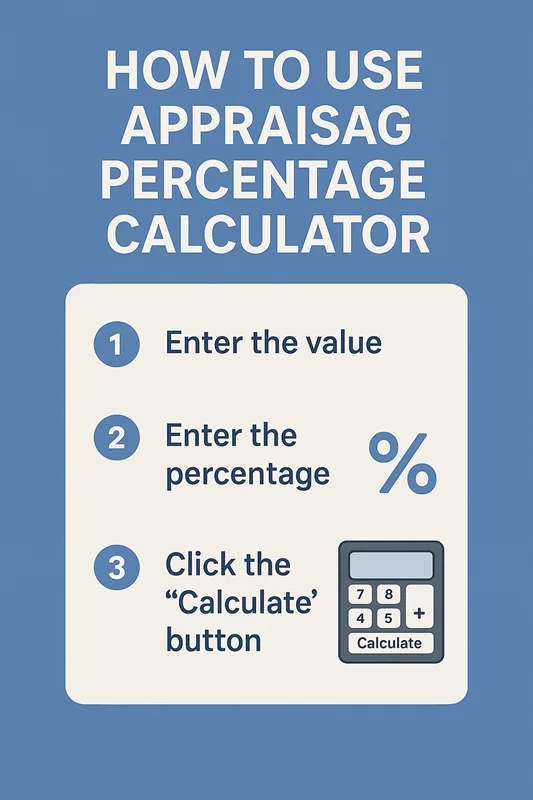
Now that you understand how appraisal percentages work, the next step is to calculate your own salary increase. Instead of performing manual calculations every time, you can use an online Appraisal Percentage Calculator to get fast and accurate results.
Simply enter your previous salary and your new salary, and the calculator will instantly show your appraisal percentage, salary increment percentage, and overall salary growth. As a result, you can quickly evaluate compensation changes, compare different salary hike scenarios, and better prepare for performance reviews or salary negotiations.
You can use the following tool to calculate your salary hike percentage:
Online Salary Hike Percentage Calculator
With this salary hike calculator, you can save time, avoid calculation errors, and gain a clear understanding of your salary increase. Furthermore, regular use of an appraisal percentage calculator can help you track career growth and make more informed financial decisions.

CGPA to Percentage is a free educational platform that helps students calculate CGPA, GPA, percentages, grades, credit hours, and other academic scores.
© 2026. All rights reserved.