
Track your academic workload accurately by calculating completed, enrolled, and remaining credit hours.
Credit Hours Calculator
Degree Requirements
Current Semester (In Progress)
Results
Total Degree Credits Required:
Completed Credits:
Current Semester Credits:
Total Earned + Current Credits:
Credits Remaining:
Degree Completion: %
Related Calculators
Credit Hour Calculator helps students find the total credits they earn from their classes. Students can use this tool to plan their school term, track completed credits, and stay on track for graduation.
Credit hours are important because colleges and universities use them to measure student progress. Knowing your credit hours can help you choose the right classes and avoid taking too much work at one time.
What Is a Credit Hour Calculator
Credit Hour Calculator is a simple tool that helps students calculate the credits earned from their courses. It adds together the credit values of all classes to show the total number of credits for a term or degree program.
Many students use this calculator before signing up for classes. The tool helps them understand how many credits they will earn and whether they meet school requirements.
How the Credit Hour Calculator Works
The calculator uses the credit value of each course. After entering course information, the tool adds the credits and shows the final total.
Students can compare the result with their degree requirements. This makes it easier to plan future classes and stay on track.
Benefits of Using a Credit Hour Calculator
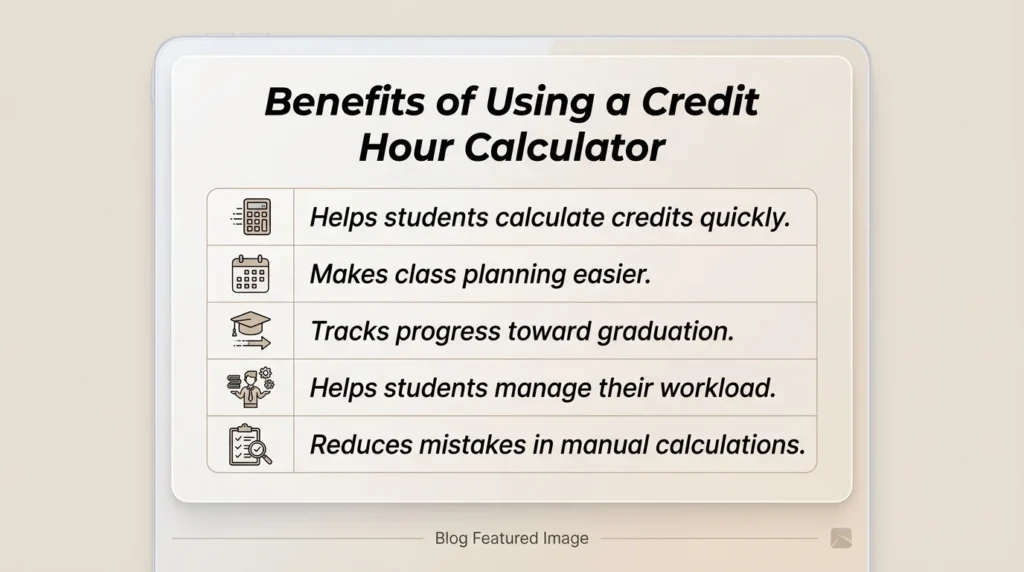
- Helps students calculate credits quickly.
- Makes class planning easier.
- Tracks progress toward graduation.
- Helps students manage their workload.
- Reduces mistakes in manual calculations.
How to Use the Credit Hour Calculator
Using the calculator is simple and only takes a few minutes. Students only need basic information about their courses.
Step-by-Step Instructions
- Enter the credit value for each class.
- Add all courses taken during the term.
- Review the total number of credits.
- Compare the result with graduation requirements.
Information Needed
Information | Why It Is Needed |
Course Credits | To calculate total credits |
Number of Classes | To add all credits together |
Lab Credits | To include practical courses |
Degree Requirements | To track graduation progress |
What Is a Credit Hour
A credit hour is a unit that schools use to measure learning. It shows how much work a student completes in a course.
Credit hours are used in colleges and universities around the world. They help schools keep track of student progress.
Why Schools Use Credit Hours
Schools use credit hours to organize degree programs. Credits help students know how much work is needed to finish a degree.
Credits also help schools decide if a student is full-time or part-time.
How Credit Hours Show Progress
Every completed course adds credits to a student’s record. As credits increase, students move closer to graduation.
Students can check their credit totals to see how much progress they have made.
How Credit Hours Are Calculated
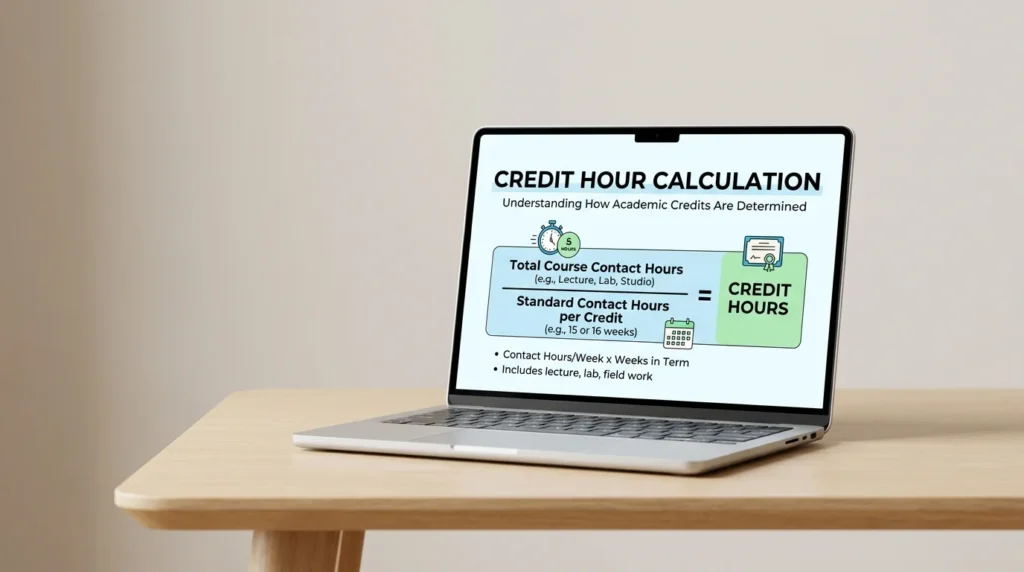
Schools calculate credit hours using class time, assignments, and learning goals. Different types of courses may use different credit systems.
Class Time and Study Time
Students spend time in class and outside class studying. Both activities are important parts of learning.
Many schools recommend two or more hours of study for every hour spent in class.
Contact Hours
Contact hours are the hours students spend with an instructor. These hours can include lectures, labs, workshops, or seminars.
Schools often use contact hours when deciding how many credits a course should have.
Credit Hour Examples
Examples make it easier to understand how credits work. Students can compare these examples with their own schedules.
Example of a Three-Credit Course
An English class meets three hours every week. The course gives three credit hours when completed.
Example of a Four-Credit Course
A science course includes three hours of lectures and one lab session. The school awards four credit hours for the course.
Example of a Full Semester Schedule
Course | Credits |
English | 3 |
Biology | 4 |
Mathematics | 3 |
Psychology | 3 |
Computer Science | 3 |
Total Credits = 16
Example of a Lab Course
A chemistry lab may meet for several hours each week. Even though students spend more time in class, the lab may only give one or two credits.
Credit Hours and Student Workload
Credit hours help students understand how much work they will have during a term. More credits usually mean more classes, assignments, and study time.
Students should think carefully before choosing a heavy course load.
Weekly Study Time
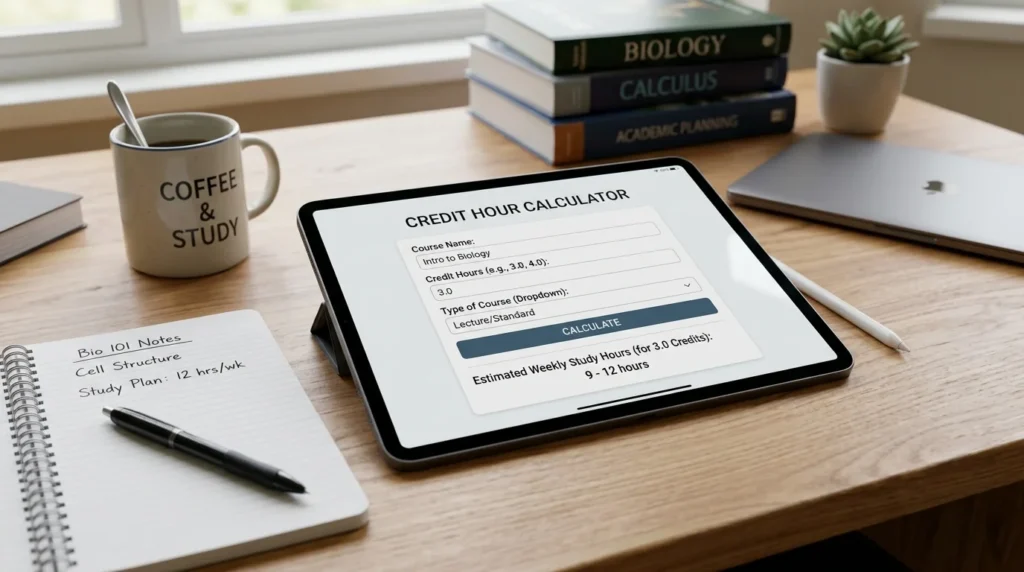
Most schools recommend two to three hours of study for every credit hour.
For example, a student taking 15 credits may spend 30 to 45 hours each week studying and completing assignments.
Managing Your Workload
Students should balance difficult and easier classes. This helps reduce stress and improves learning.
Planning ahead can make each term easier to manage.
Full-Time and Part-Time Student Credit Hours
Schools use credit hours to decide whether a student is full-time or part-time.
The number of credits required may vary from one school to another.
Full-Time Students
Most colleges consider students full-time when they take 12 or more credit hours in a term.
Full-time students often finish their degrees faster because they take more classes.
Part-Time Students
Part-time students usually take fewer than 12 credit hours.
Many students choose part-time study because they have jobs, family duties, or other responsibilities.
Credit Hour Table
Student Status | Credit Hours |
Part-Time | 1–11 |
Full-Time | 12–18 |
Heavy Course Load | 19+ |
Credit Hours Required for Graduation
Every degree program requires a certain number of credits. Students must earn enough credits before they can graduate.
Associate Degree
Most associate degrees require about 60 credit hours.
Students often complete these programs in two years of full-time study.
Bachelor Degree
Most bachelor degrees require around 120 credit hours.
Students usually finish these programs in four years.
Master Degree
Master programs often require between 30 and 60 credit hours.
The exact number depends on the field of study.
Degree Credit Table
Degree Type | Typical Credits |
Associate Degree | 60 |
Bachelor Degree | 120 |
Master Degree | 30–60 |
Doctoral Degree | Varies |
Credit Hours and GPA
Credit hours play an important role in GPA calculations. Classes with more credits have a greater effect on a student’s GPA.
How Credits Affect GPA
A four-credit class affects GPA more than a one-credit class. Good grades in high-credit courses can improve overall results.
Poor grades in high-credit courses can lower GPA more quickly.
Why Credit Hours Matter
Credit hours help schools measure both learning and achievement. They also affect graduation requirements and academic standing.
Students should understand how credits and grades work together.
Frequently Asked Questions
Conclusion
A Credit Hour Calculator makes it easy to track your credits and plan your studies. Students can quickly find their total credit hours, manage their course load, and stay on track for graduation. The calculator also helps with class planning and prevents mistakes that can happen during manual calculationsUnderstanding credit hours is important because they affect graduation requirements, student status, and academic progress. By checking your credits regularly, you can make better decisions about your classes and avoid delays in completing your degree.
Your Next Step
Now that you understand how credit hours work, the next step is to calculate your own credits. Enter your courses and credit values into a Credit Hour Calculator to see your total credits and track your progress toward graduation.
Regularly checking your credit hours can help you choose the right classes, balance your workload, and avoid delays in completing your degree. It is a simple habit that can make academic planning much easier.Ready to calculate your credits? Try our Credit Hour Calculator and get instant results:
https://cgpacalculatoronline.com/credit-hours-calculator/
Use the calculator today to stay organized, plan future semesters, and keep moving toward your graduation goals.