GPA Requirements for MIT
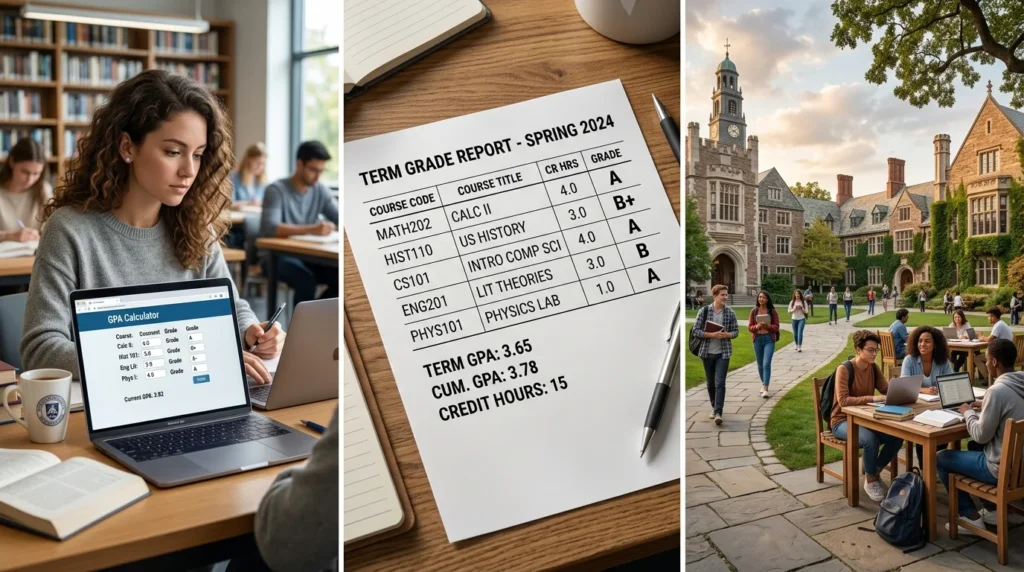
Track your academic workload accurately by calculating completed, enrolled, and remaining credit hours.

Introduction
Getting into the Massachusetts Institute of Technology (MIT) is a dream for many students. The university is famous for science, engineering, technology, and innovation. Every year, thousands of students apply, but only a small number receive admission. That is why many students ask about the GPA Requirements for MIT before they begin the application process.
The good news is that MIT does not set a minimum GPA for applicants. However, your grades still play a big role in the admission process. A strong academic record shows that you are ready for college-level work. It also proves that you can succeed in challenging subjects.
In this guide, you will learn everything about the GPA Requirements for MIT. We will explain the average GPA, the courses you should take, and other factors that can improve your application.
What Are the GPA Requirements for MIT?
One of the most common questions students ask is whether MIT has an official GPA requirement. The answer is simple. MIT does not publish a minimum GPA.
Instead, the admissions team reviews your complete academic record. They look at your grades, the difficulty of your classes, and your progress during high school. This means the GPA Requirements for MIT are flexible, but your grades should still be excellent.
Most students who receive admission have very high GPAs. They also challenge themselves with advanced classes. This combination shows that they are ready for MIT’s demanding courses.
What GPA Do Most MIT Students Have?
Although there is no official minimum, the average admitted student has an excellent academic record.
Most successful applicants have:
- Unweighted GPA close to 3.9–4.0
- Weighted GPA above 4.5 (if their school uses weighted grades)
- Strong grades in math and science courses
- Excellent classroom performance throughout high school
Remember that these numbers are only averages. Meeting the average GPA does not guarantee admission. Likewise, a slightly lower GPA does not automatically prevent you from getting accepted.
The admissions committee reviews every application carefully.
Why Your GPA Matters
Your GPA tells MIT how well you perform over several years. It shows your work ethic, study habits, and ability to handle difficult subjects.
However, the GPA Requirements for MIT are only one part of your application. MIT uses a holistic admission process. This means admissions officers review many factors before making a decision.
They also consider:
- Course difficulty
- Personal essays
- Recommendation letters
- Extracurricular activities
- Leadership experience
- Research projects
- Awards and achievements
A high GPA is helpful, but it works best when combined with a strong overall application.
Take Challenging High School Courses
MIT wants students who enjoy learning. Because of this, the university values challenging coursework.
If your school offers advanced classes, consider taking them whenever possible.
Examples include:
- Advanced Placement (AP)
- International Baccalaureate (IB)
- Honors courses
- Dual-enrollment classes
- Advanced mathematics
- Physics
- Chemistry
- Computer Science
Good grades in these subjects strengthen your application. They also show that you are ready for the academic challenges at MIT.
Focus on Math and Science
MIT is known for STEM education. Therefore, students should build a strong foundation in mathematics and science.
Try to earn high grades in subjects such as:
- Algebra
- Geometry
- Calculus
- Biology
- Chemistry
- Physics
- Computer Science
Strong performance in these subjects supports the GPA Requirements for MIT and demonstrates your academic ability.
Build Good Study Habits
A high GPA does not happen by accident. It comes from regular study and consistent effort.
Here are a few simple tips:
- Complete homework on time.
- Review your notes every day.
- Ask teachers for help when needed.
- Practice solving difficult problems.
- Prepare early for exams.
- Stay organized throughout the school year.
These habits can improve your grades and make learning less stressful.
Key Takeaways
Understanding the GPA Requirements for MIT is the first step toward building a competitive application. While MIT does not require a minimum GPA, most admitted students earn excellent grades and complete challenging courses. Focus on maintaining strong academic performance, especially in math and science, while developing consistent study habits.
How MIT Looks at Your GPA
The GPA Requirements for MIT are only one part of the admission process. MIT does not admit students based on grades alone. Instead, the admissions team reviews your complete academic record.
They want to see that you worked hard throughout high school. They also look for students who challenged themselves with difficult classes. A high GPA is important, but steady improvement and strong course choices also matter.
For example, earning an A in an Advanced Placement (AP) class can be more valuable than earning an A in an easier course. MIT wants students who enjoy learning and are ready for college-level work.
Weighted vs. Unweighted GPA
When researching the GPA Requirements for MIT, you will often see two types of GPA.
Unweighted GPA
An unweighted GPA uses a 4.0 scale. Every class has the same value.
For example:
- A = 4.0
- B = 3.0
- C = 2.0
- D = 1.0
This GPA only measures your grades.
Weighted GPA
A weighted GPA gives extra points for difficult classes.
These classes may include:
- AP courses
- IB courses
- Honors classes
- Dual-enrollment courses
Many admitted MIT students have a weighted GPA above 4.5 because they complete advanced coursework while maintaining excellent grades.

Does Course Difficulty Matter?
Yes. Course difficulty is a major part of the GPA Requirements for MIT.
MIT expects students to challenge themselves whenever possible. If your school offers advanced classes, you should consider taking them.
Strong subjects include:
- Calculus
- Physics
- Chemistry
- Biology
- Computer Science
- Advanced Mathematics
- Engineering courses
Good grades in these subjects show that you are ready for MIT’s challenging curriculum.
Does Class Rank Help?
Some schools report class rank, while others do not.
If your school provides class rank, being near the top of your class can strengthen your application.
However, MIT does not require class rank. Instead, admissions officers compare your achievements with the opportunities available at your school.
This means they evaluate your performance fairly, even if your school does not rank students.
Are Test Scores Important?
Standardized test scores can support the GPA Requirements for MIT, but they are only one part of the application.
Strong scores in mathematics and reading show that you are prepared for university-level study.
However, excellent test scores cannot replace weak grades. Likewise, a strong GPA alone may not guarantee admission.
MIT wants students who perform well in different areas.
Extracurricular Activities Matter
Good grades are important, but MIT also looks for students who make a difference outside the classroom.
Quality matters more than quantity.
Strong extracurricular activities include:
- Robotics competitions
- Science fairs
- Coding projects
- Research internships
- Math competitions
- Debate club
- Student government
- Community service
- Volunteer work
- Entrepreneurship
Choose activities that match your interests. Long-term commitment often makes a stronger impression than joining many clubs for a short time.
Personal Essays Make a Difference
Your essays allow you to tell your story.
Admissions officers want to know:
- Why you enjoy learning.
- What challenges you have overcome.
- How you solve problems.
- What inspires you.
- How you will contribute to the MIT community.
Write honestly and use your own experiences. A personal essay should sound natural and reflect your personality.
Strong Recommendation Letters
Recommendation letters also support the GPA Requirements for MIT.
Choose teachers who know you well.
A good recommendation should explain:
- Your work ethic
- Your curiosity
- Your classroom participation
- Your leadership skills
- Your academic growth
These letters help the admissions committee understand your strengths beyond grades.
Build a Balanced Application
Many students believe that GPA is everything. That is not true.
MIT looks at your entire application. A balanced application often includes:
- Excellent GPA
- Challenging courses
- Strong essays
- Leadership experience
- Research projects
- Meaningful extracurricular activities
- Positive recommendation letters
When these parts work together, your application becomes much stronger.
Key Takeaways
The GPA Requirements for MIT are important, but they are only one piece of the puzzle. MIT reviews your GPA, course rigor, essays, extracurricular activities, recommendations, and personal achievements together. Building a balanced application gives you the best chance of standing out in a competitive admissions process.
How to Improve Your Chances of Getting Into MIT
Meeting the GPA Requirements for MIT is a great start, but it is not enough on its own. MIT looks for students who are curious, hardworking, and ready to solve real-world problems. Your goal should be to build a strong application in every area.
Here are some simple ways to improve your chances.
Keep Your GPA High
A high GPA is one of the strongest parts of your application. Try to earn good grades in every semester, not just during your final year.
If your grades drop, work with your teachers and improve as quickly as possible. Admissions officers like to see progress.
Choose Advanced Courses
MIT values students who challenge themselves.
If your school offers advanced classes, consider taking:
- AP courses
- IB courses
- Honors classes
- Dual-enrollment courses
Good grades in these subjects support the GPA Requirements for MIT and show that you can handle difficult academic work.
Build Meaningful Activities
Your activities outside the classroom also matter.
Instead of joining many clubs, focus on a few that match your interests.
Good examples include:
- Robotics clubs
- Coding competitions
- Science Olympiads
- Math contests
- Research projects
- Community service
- Student leadership
- Engineering competitions
Long-term involvement shows commitment and passion.
Common Mistakes to Avoid
Many students make small mistakes that weaken their applications.
Avoid these common problems:
- Focusing only on GPA.
- Taking easy classes to protect grades.
- Ignoring math and science subjects.
- Writing generic application essays.
- Waiting too long to prepare.
- Choosing weak recommendation letters.
- Not proofreading the application.
Avoiding these mistakes can improve your overall application.
Can You Get Into MIT With a Lower GPA?
Yes, it is possible.
Although most admitted students have excellent grades, MIT reviews every application carefully.
If your GPA is lower than average, you can still improve your chances by showing strengths in other areas.
These may include:
- Outstanding research
- National competitions
- Science awards
- Strong essays
- Leadership roles
- Community impact
- Exceptional recommendation letters
A lower GPA does not always mean rejection. Your complete application matters.

Frequently Asked Questions
There is no official minimum GPA. However, most admitted students have an unweighted GPA between 3.9 and 4.0 while taking challenging classes.
A 3.8 GPA can still be competitive. However, you should also have strong coursework, excellent essays, meaningful activities, and positive recommendation letters.
MIT reviews both when available. More importantly, the admissions team looks at the difficulty of your classes and your overall academic performance.
Yes. Advanced courses show that you are willing to challenge yourself. Strong grades in these classes can strengthen your application.
No. MIT uses a holistic admission process. The university also reviews essays, extracurricular activities, leadership, recommendations, and personal achievements
Conclusion
Understanding the GPA Requirements for MIT is an important step if you plan to apply to one of the world’s top universities. Although MIT does not have an official minimum GPA, most successful applicants have an excellent academic record and take challenging courses throughout high school. Strong grades, especially in math and science, can make your application more competitive.
However, GPA is only one part of the admissions process. MIT also values leadership, creativity, research experience, extracurricular activities, recommendation letters, and authentic personal essays. Building a balanced application will give you the best chance of standing out among thousands of applicants.
Start preparing early, challenge yourself academically, and stay committed to your goals. With consistent effort and the right strategy, you can build a strong application that reflects your abilities and passion for learning.
Next Steps
Now that you understand the GPA Requirements for MIT, it is a good idea to learn how MIT calculates GPA using its official 5.0 grading scale. The MIT Registrar’s GPA Calculation Guide explains how letter grades, course units, repeated subjects, and GPA conversions are handled. Reviewing this resource can help you better understand your academic performance and plan your coursework effectively.