IGCSE Grades
Track your academic workload accurately by calculating completed, enrolled, and remaining credit hours.

Introduction
IGCSE Grades help schools, colleges, and universities measure a student’s academic performance. They show how well a student understands each subject and whether they have met the learning goals set by the examination board.
Many students and parents have questions about the grading system. They want to know what each grade means, how grades are awarded, and how they affect future education. Understanding the process makes exam preparation less stressful and helps students set realistic goals.
This guide explains everything in simple language. You will learn how the grading system works, what the grade scale means, and how to prepare for better results.
What Are IGCSE Grades?
IGCSE Grades are the final results awarded after students complete their examinations. They reflect a student’s knowledge, skills, and overall performance in a subject.
Each subject receives its own grade. This means a student may earn different grades in mathematics, biology, chemistry, English, or history. The final result depends on exam performance rather than classroom participation.
The grading system is designed to measure understanding instead of memorization. Students are rewarded for applying knowledge, solving problems, and answering questions clearly.
Understanding the Grade Scale
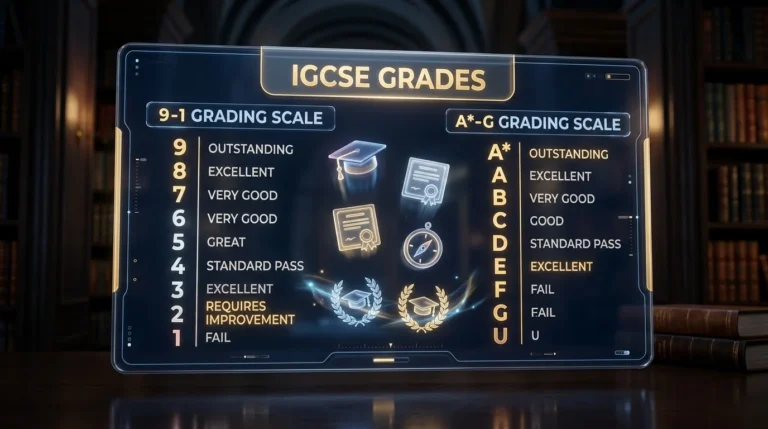
Most modern IGCSE qualifications use a 9–1 grading scale, while some subjects may still use the traditional A to G* scale. Both systems measure achievement, but they present results differently.
Here is a simple overview of the 9–1 scale:
- Grade 9 – Exceptional performance
- Grade 8 – Excellent achievement
- Grade 7 – Strong performance
- Grade 6 – Above average understanding
- Grade 5 – Good pass
- Grade 4 – Standard pass
- Grade 3 – Basic understanding
- Grade 2 – Limited achievement
- Grade 1 – Minimum performance
Higher grades show a stronger understanding of the subject and may improve opportunities for further education.
How Are Grades Awarded?
Examination boards use several steps before awarding IGCSE Grades. Students first complete written, practical, or coursework assessments, depending on the subject. Examiners then mark every paper using official marking guidelines.
After marking is complete, grade boundaries are set. These boundaries determine the number of marks needed for each grade. Because each exam paper has a different level of difficulty, grade boundaries may change from one exam session to another.
This process helps ensure that grading remains fair for every student.
Why IGCSE Grades Matter
Strong IGCSE Grades can open many academic opportunities. Schools often use them when selecting students for advanced courses such as A Levels, International Baccalaureate, or other pre-university programs.
Universities also review secondary school results during the admission process. Although admission requirements vary, good grades show that a student has developed strong study habits and subject knowledge.
Many employers also value these qualifications because they demonstrate discipline, problem-solving skills, and consistent effort.
Subjects Included in the Qualification
Students usually study a combination of compulsory and optional subjects.
Common subjects include:
- English Language
- Mathematics
- Biology
- Chemistry
- Physics
- Business Studies
- Economics
- Geography
- History
- Computer Science
- Information and Communication Technology
Each subject is graded separately, allowing students to build a balanced academic record.
How Grade Boundaries Work
Many students think a fixed score always leads to the same result. That is not how the system works. IGCSE Grades are awarded after grade boundaries are set for each exam session.
Grade boundaries show the minimum marks needed for each grade. They are reviewed after exams have been marked. If a paper is more difficult than expected, the boundary may be lower. If it is easier, the boundary may be higher. This process helps keep results fair from one year to the next.
For this reason, students should focus on earning as many marks as possible instead of aiming for a specific percentage.
How IGCSE Grades Compare with GPA
Many universities use a Grade Point Average, or GPA, instead of the IGCSE grading scale. There is no single official conversion because each school or university follows its own admission policy.
When reviewing applications, universities often consider:
- Individual subject grades
- Overall academic performance
- Required subjects for the chosen course
- Entrance exams, if needed
- Personal statements and other achievements
Instead of relying on an estimated GPA, students should check the admission requirements of the institution they plan to attend.
Tips to Improve Your Results
Improving your IGCSE Grades takes planning and regular practice. A simple study routine is often more effective than long revision sessions before the exam.
Use these strategies to prepare with confidence:
Create a Weekly Study Plan
Set clear goals for each study session. Focus on one subject at a time and review difficult topics every week. A steady routine helps you remember information for longer.
Practice with Past Papers
Past papers help you understand the exam format and common question styles. They also improve your speed and time management. After completing each paper, review your mistakes and learn how to avoid them.
Learn the Marking Style
Read examiner reports or mark schemes when available. These resources show what examiners expect in high-scoring answers. Writing clear and complete responses can improve your marks.
Strengthen Weak Subjects
Spend extra time on subjects that you find difficult. Ask your teacher for help, join a study group, or use trusted revision resources. Small improvements each week can make a big difference by exam time.
Common Mistakes Students Make
Some students work hard but still lose marks because of simple errors.
Try to avoid these mistakes:
- Leaving questions unanswered
- Misreading instructions
- Writing answers that are too short
- Ignoring command words such as explain or compare
- Spending too much time on one question
- Skipping regular revision
Building good exam habits can help improve your overall performance.
Planning for Future Studies
Good IGCSE Grades provide a strong foundation for higher education. Many students continue with A Levels, foundation programs, or other international qualifications after completing their exams.
Choosing the right subjects and maintaining consistent study habits can also support applications to colleges and universities in different countries. While grades are important, many institutions also consider personal achievements, language skills, and extracurricular activities.
Best Revision Resources
Using reliable study materials makes exam preparation easier.
Helpful resources include:
- Official syllabus documents
- Approved textbooks
- Revision guides
- Topic summaries
- Practice questions
- Past examination papers
- Mark schemes
- Flashcards for key terms
Using more than one resource helps you understand topics from different perspectives.
Exam-Day Advice
Preparation does not end when revision is complete. Good habits on exam day can also improve your performance.
Before the exam:
- Get enough sleep.
- Eat a healthy meal.
- Arrive at the exam center early.
- Bring all required materials.
During the exam:
- Read every question carefully.
- Plan your time before you start writing.
- Answer all questions if possible.
- Review your work before submitting the paper.
Staying calm helps you think clearly and avoid simple mistakes.
How to Build Strong Study Habits
Success does not come from studying only before the examination. It comes from steady effort throughout the school year.
These habits can help:
- Revise a little every day.
- Keep your notes organized.
- Break large topics into smaller sections.
- Test yourself often.
- Ask for help when needed.
- Take short breaks while studying.
These simple steps improve both confidence and long-term learning.

Frequently Asked Questions
The answer depends on your goals. Many schools consider Grades 4 and 5 to be good passes. However, competitive colleges and universities may expect Grades 7, 8, or 9 in important subjects.
Most subjects now use the 9–1 grading scale. However, some qualifications may still follow the A* to G system. Always check the grading method for your subject before the examination.
Yes. Grade boundaries are reviewed after every exam session. They may change because each examination paper has a different level of difficulty. This process helps ensure fairness for all students.
Yes. Students who revise regularly, complete past papers, and review their mistakes often improve their performance. A clear study plan can make a significant difference over time.
Conclusion
IGCSE Grades are an important part of your academic journey. They measure your understanding of each subject and help schools, colleges, and universities evaluate your progress. While good results create more opportunities, they are only one part of your overall education.
The best way to achieve strong IGCSE Grades is to study consistently, understand key concepts, and practice exam-style questions throughout the year. Regular revision, effective time management, and careful preparation can improve your confidence and help you perform at your best.
Next Steps
After learning how the grading system works, your next step is to review the latest official guidance for your examinations. Reading the official grading information helps you understand grade scales, assessment methods, and current policies.
Visit the official Cambridge IGCSE grading information here:
https://www.cambridgeinternational.org/Images/412121-igcse-9-1-grading-factsheet.pdf
Use this guide alongside your syllabus, textbooks, and past papers. A structured revision plan and reliable resources will help you prepare with confidence and make the most of your IGCSE Grades.