Calculate percentage increase or decrease
When your landlord announces a rent increase, the first question that comes to mind is: “How much will I actually pay?” A rent increase percentage calculator takes the guesswork out of this equation, helping you determine your new monthly rent amount in seconds.
Whether you’re a tenant preparing your budget or a landlord setting fair rental rates, understanding how to calculate rent increases accurately is essential. This comprehensive guide breaks down everything you need to know about rent increase calculations, legal limits, and practical scenarios you’ll encounter.
A rent increase percentage calculator is a simple tool that determines your new rent amount after applying a percentage increase to your current rent. Instead of manually crunching numbers, you input your current rent and the increase percentage to get an instant result.
This rent hike calculator serves multiple purposes beyond basic math. It helps tenants verify that their landlord’s calculations are correct and assists property managers in quickly determining new rental amounts across multiple properties. The tool eliminates human error and provides transparency in rent adjustment processes.
Tenants: Verify rent increase notices and plan budgets accordingly using a percentage calculator
Landlords: Calculate fair rent adjustments for lease renewals
Property managers: Streamline rent escalation across multiple units
Real estate professionals: Assist clients with rental property investments
Using a rent escalation tool saves valuable time and prevents costly calculation mistakes. Manual calculations can lead to disputes between tenants and landlords, while automated tools provide clear, verifiable results that both parties can trust.
For landlords managing multiple properties, consistency in rent calculations maintains professional credibility and legal compliance. Tenants benefit by having immediate clarity on their housing costs, allowing for better financial planning.
Understanding the rent increase formula empowers you to verify calculations and make informed decisions about your rental situation. The math is straightforward once you know the basic components.
The standard formula for calculating new rent after a percentage increase is:
New Rent = Current Rent × (1 + % Increase ÷ 100)
You can also calculate the actual dollar increase first: Dollar Increase = Current Rent × (% Increase ÷ 100) New Rent = Current Rent + Dollar Increase
Both methods produce identical results, so choose whichever feels more intuitive to you.
Let’s walk through a practical example step by step:
Current rent: $1,200 per month Percentage increase: 5%
Step 1: Convert percentage to decimal: 5 ÷ 100 = 0.05 Step 2: Add 1 to the decimal: 1 + 0.05 = 1.05 Step 3: Multiply current rent by this number: $1,200 × 1.05 = $1,260
Result: Your new rent after a 5% increase is $1,260 per month, representing a $60 monthly increase.
Different rental situations call for various approaches to rent adjustments. Understanding these scenarios helps both tenants and landlords navigate the process more effectively.
Most rental agreements include provisions for annual rent increases tied to inflation or market conditions. These increases typically range from 2% to 5% in markets without rent control restrictions.
Annual adjustments help landlords keep pace with rising property taxes, maintenance costs, and market rates. For tenants, predictable annual increases allow for better long-term budgeting compared to sudden, larger adjustments.
When leases expire, landlords often implement increases that reflect current market conditions. These rent hikes may exceed typical annual adjustments, especially in rapidly appreciating markets.
Lease renewal increases give landlords opportunities to align rents with comparable properties while providing tenants advance notice to make housing decisions. Smart tenants research local rental markets before renewal negotiations.
Property managers often calculate projected rent increases over multiple years to forecast revenue and plan capital improvements. These projections help with investment decisions and long-term property management strategies.
Multi-year rent escalation planning benefits tenants through predictable housing costs and helps landlords maintain competitive properties through reinvestment in improvements and maintenance.
Rent increase regulations vary significantly by location, with some areas imposing strict caps while others allow market-driven adjustments. Understanding local laws protects both tenants and landlords from legal complications.
Many cities and states have implemented rent control or rent stabilization laws that limit annual increases. For example, some California cities cap increases at 5% plus inflation, while New York has complex rent stabilization rules for certain properties.
Research your local jurisdiction’s specific regulations, as violating rent control laws can result in significant penalties for landlords and provide tenants with legal recourse for excessive increases.
Landlords must provide proper notice before implementing rent increases, typically 30 to 60 days depending on local requirements. Some jurisdictions require specific forms or documentation to justify increases above certain thresholds.
Understanding tenant rights and local regulations protects landlords from lawsuits while maintaining positive tenant relationships. Consulting with local real estate attorneys ensures compliance with evolving rental laws.
The amount your rent can increase depends on multiple factors including local laws, market conditions, and your specific lease agreement. Understanding these variables helps set realistic expectations.
In areas without rent control, annual increases typically range from 3% to 8%, though hot markets may see higher adjustments. Economic factors like inflation, local job growth, and housing supply significantly influence these ranges.
Market-rate increases often align with local inflation rates plus a small premium for property improvements and rising operating costs. Tenants in high-demand areas should expect increases at the higher end of typical ranges.
Legitimate reasons for rent increases include rising property taxes, increased utility costs, major property improvements, and alignment with current market rates. Landlords investing in property upgrades often implement increases to recoup improvement costs.
Unjustified increases might indicate landlords attempting to force tenant turnover or simply testing market tolerance. Tenants should research comparable rents to evaluate whether proposed increases align with local market conditions.
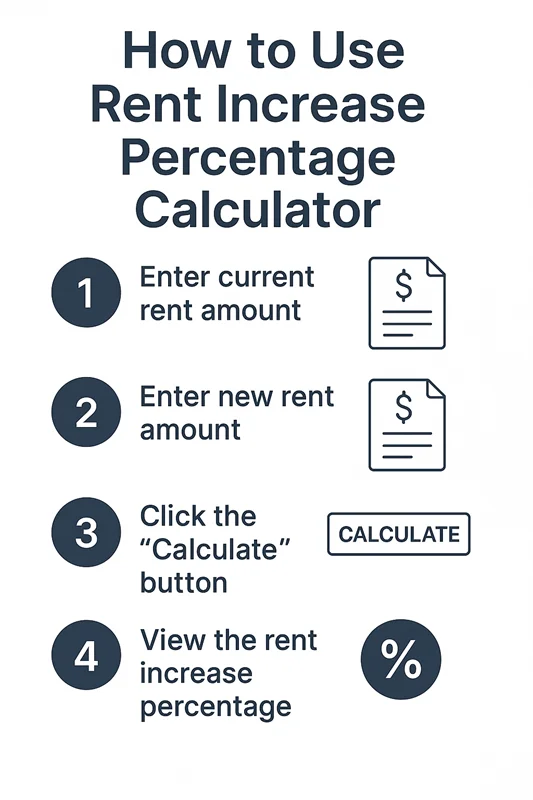
A Rent Increase Percentage Calculator is a valuable tool for both tenants and landlords who want to calculate rent adjustments quickly and accurately. Whether you’re reviewing a lease renewal, planning a rental budget, or determining a fair rent increase, a Rent Increase Percentage Calculator helps eliminate manual calculations and provides reliable results in seconds.
Using a Rent Increase Percentage Calculator makes it easier to understand how a percentage increase affects your monthly and annual rent. It also helps landlords set transparent rental adjustments while allowing tenants to verify rent changes before signing a new lease agreement. By using a Rent Increase Percentage Calculator, you can make informed financial decisions, avoid calculation mistakes, and better prepare for future housing expenses.
Ready to calculate your rent increase with confidence?
Use a trusted Rent Increase Percentage Calculator to instantly determine how much your rent will increase based on a percentage or calculate the percentage difference between your current and new rent. The calculator provides fast, accurate results, making it useful for lease renewals, budgeting, and financial planning.
For another reliable Rent Increase Percentage Calculator resource, visit:
https://www.omnicalculator.com/finance/rent-increase
A dependable Rent Increase Percentage Calculator helps tenants understand the financial impact of rent adjustments while giving landlords a simple way to calculate fair rental increases. Whether you’re comparing rental offers, negotiating lease terms, or preparing for annual rent reviews, accurate calculations can help you make better housing decisions.
Make the Rent Increase Percentage Calculator part of your financial planning toolkit. Regularly using a Rent Increase Percentage Calculator helps you stay informed about changing rental costs, manage your monthly budget effectively, and confidently plan for future housing expenses.

CGPA to Percentage is a free educational platform that helps students calculate CGPA, GPA, percentages, grades, credit hours, and other academic scores.
© 2026. All rights reserved.